Spillestil-editoren: Hvor din taktiske visjon blir levende
Alle trenere har et bilde i hodet. Hvordan laget skal bevege seg. Øyeblikkene som utløser overganger. Mønstrene som åpner forsvar. Men å få den visjonen ut av hodet og inn i spillerne? Der ligger magien — og utfordringen.
Hva om din taktiske filosofi kunne vise seg selv?
Vi presenterer Spillestil-editoren — et visuelt verktøy der du kan definere hele fotballfilosofien din, dele den opp i konkrete spillsituasjoner og se AI-genererte animasjoner gi taktikken din liv. Dette er ikke bare et planleggingsverktøy. Det er trenerhodet ditt — visualisert.
Problemet alle trenere kjenner
Du kjenner filosofien din. Du kan føle den. Men å forklare "Jeg vil at vi spiller ut bakfra med sekseren som faller mellom stopperne for å skape en 3-2-struktur" krever mer enn ord. Det krever å vise. Tegne. Demonstrere.
Taktikktavler blir rotete. Statiske diagrammer fanger ikke bevegelse. Og spillerne dine? De lærer ved å se.
Vi bygde Spillestil-editoren for å løse akkurat dette: ett sted der hele din taktiske identitet lever, puster og beveger seg.
Start med filosofi — ikke formasjon
Her er det som skiller oss fra alle andre taktiske verktøy.
De fleste verktøy starter med en formasjon. Dra rundt noen prikker. Ferdig. Men fotball handler ikke om hvor spillere står — det handler om hvordan de tenker.
Spillestil-editoren starter med filosofi. Når du oppretter en ny stil, velger du mellom fire utgangspunkter:
Ballbesittelsesbasert
Tiki-taka. Tålmodig oppbygging. Død gjennom tusen pasninger. Hvis du tror det beste forsvaret er å holde ballen, får du her et fundament av posisjonsspill, bevisste oppbyggingsmønstre og kompromissløs ballbesittelse.
Direkte og omstillingsfokusert
Kontringsfotball. Raske overganger. Vinn, bryt, slå til. Denne filosofien prioriterer vertikal bevegelse, raske bytter og utnyttelse av rom før forsvaret rekker å organisere seg.
Defensivt kompakt
Dypt forsvar. Organisert. Vent på riktig øyeblikk. Perfekt for lag som foretrekker å absorbere press, holde seg kompakte og slå til på dødball og overganger.
Bygg din egen
Tomt lerret. Din filosofi, dine regler. For trenere som vil skape noe helt unikt.
Hvorfor det betyr noe: Hver filosofi kommer med relevante faser, prinsipper og situasjoner fra start. Du starter ikke fra null — du bygger på taktiske fundamenter som gir mening for din tilnærming.
Intelligens på tvers av formasjoner
Ekte fotball er ikke én formasjon. Den er flytende. Din 4-3-3 i ballbesittelse blir en 4-4-2 uten ball. Din høye press fungerer annerledes enn din mellomblokk.
Spillestil-editoren håndterer dette elegant:
- Legg til flere formasjoner til én stil (4-3-3, 4-4-2, 3-5-2 — så mange du trenger)
- Hver formasjon får sin egen taktiske kontekst — ulike faser, ulike situasjoner
- Sett en primær formasjon og beskriv når og hvorfor du bytter mellom dem
Din taktiske identitet er ikke fanget i én form. Den flyter.
Tre faner — ett system
Editoren organiserer alt i tre fokuserte faner:
| Fane | Hva du gjør | |------|-------------| | Formasjoner | Sett opp grunnformasjonene dine med beskrivelser og kontekst | | Taktikk | Opprett detaljerte spillsituasjoner med triggere, handlinger og suksesskriterier | | Prinsipper | Definer kjerneideene som styrer spillerbeslutninger i hver fase |
Strukturen speiler hvordan moderne trening fungerer: prinsipper driver taktikk, taktikk opererer innenfor formasjoner, formasjoner tjener filosofien.
Spillsituasjoner: Hjertet i systemet
Her skiller Spillestil-editoren seg virkelig ut.
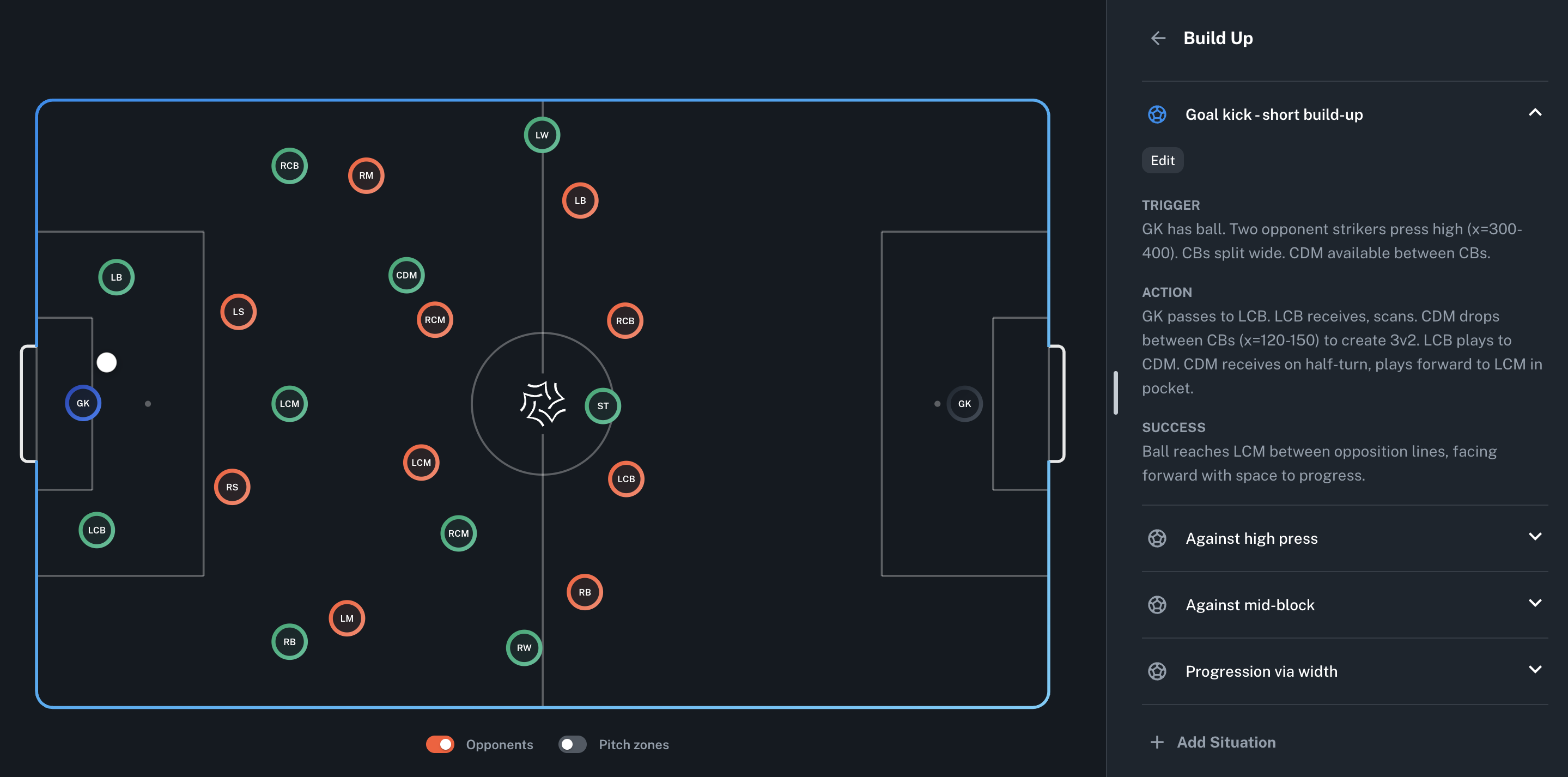
Innenfor hver fase — Oppbygging, Angrep, Forsvar, Overganger — oppretter du Spillsituasjoner. Hver situasjon fanger et spesifikt taktisk øyeblikk med kirurgisk presisjon:
Trigger
Når skjer dette? "Når motstanderen presser høyt og keeperen vår har ballen..."
Handling
Hva skal spillerne gjøre? "Sekseren faller mellom stopperne. Backene pusher høyt. Kantspillerne holder seg brede for å strekke pressen..."
Suksesskriterier
Hvordan vet vi at det fungerte? "Vi avanserer ballen forbi motstanderens første linje med en midtbanespiller fri i rommet."
Visuell posisjonering
Plasser alle spillere på banen — alle 11 av dine, pluss motstandere. Plasser ballen. Sett scenen akkurat slik du forestiller deg den.
Resultatet? Et komplett taktisk scenario som spillere kan studere, forstå og utføre. Ingen tvetydighet. Ingen "hva mente treneren?" Bare klarhet.
AI-genererte animasjoner: Se taktikken din i bevegelse
Her blir det virkelig interessant.
Beskriv situasjonen din med vanlige ord. Fortell AI-en hva du vil skal skje. Og se Driblo generere animerte keyframes som viser nøyaktig hvordan spillet utvikler seg:
- Spillerbevegelser over hele banen
- Ballbane fra pasning til pasning
- Handlinger som pasninger, driblinger og skudd tydelig markert
- Flere keyframes som viser spillets utvikling
AI-en forstår fotball. Den vet at når du sier "overlast venstre side," mener du kantspillere, backer og midtbanespillere som skaper numerisk overlegenhet. Den oversetter trenerspråket ditt til visuell bevegelse.
Ikke fornøyd? Rediger manuelt. Regenerer. Finjuster til det er perfekt.
Dette er ikke generisk animasjon. Det er din taktikk, din filosofi, som beveger seg på skjermen.
Klubb- eller lagnivå
Fotballklubber har identitet. Måten førstelaget spiller på bør prege hvordan ungdomslagene utvikles. Prinsippene bør flyte nedover.
Spillestil-editoren støtter begge deler:
- Klubbnivå-stiler som gjelder på tvers av alle lag — etablerer en samlet spilleidentitet
- Lagnivå-stiler for spesifikke tropper — gir rom for alderstilpassede justeringer mens klubb-DNA-et bevares
G13-laget ditt kan ha en forenklet versjon av førstelagets filosofi. Reservelaget ditt kan eksperimentere med variasjoner. Alt henger sammen.
Den komplette arbeidsflyten
Slik kommer alt sammen:
- Opprett — Velg filosofien din, sett nivået (klubb eller lag), velg troppen din
- Legg til formasjoner — Bygg de taktiske formene dine med beskrivelser
- Definer faser — Oppbygging, Angrep, Forsvar, Offensiv overgang, Defensiv overgang
- Opprett situasjoner — Detaljerte scenarier med triggere, handlinger og visualiseringer
- Legg til prinsipper — De veiledende ideene for hver fase
- Generer animasjoner — La AI-en gi situasjonene dine liv
- Aktiver — Publiser fra Utkast til Aktiv når du er klar
Din komplette taktiske identitet — dokumentert, visualisert og klar til deling.
Hvorfor dette endrer alt
De fleste treningsprogrammer gir deg verktøy. Tegn dette. Planlegg det. Registrer noe annet.
Spillestil-editoren gir deg klarhet.
Når en spiller spør "hva skal jeg gjøre når de presser høyt?" — har du et animert svar. Når assistenttreneren din starter midt i sesongen — kan de studere hele filosofien din på ett sted. Når du vil utvikle stilen din — kan du jobbe visuelt i stedet for verbalt.
Dette er forskjellen mellom å beskrive fotball og vise fotball.
Klar til å gi din taktiske visjon liv? Åpne Driblo, gå til Spillestil og begynn å bygge. Fotballfilosofien din fortjener å bli sett — ikke bare forklart.